
Sensing and acquisition
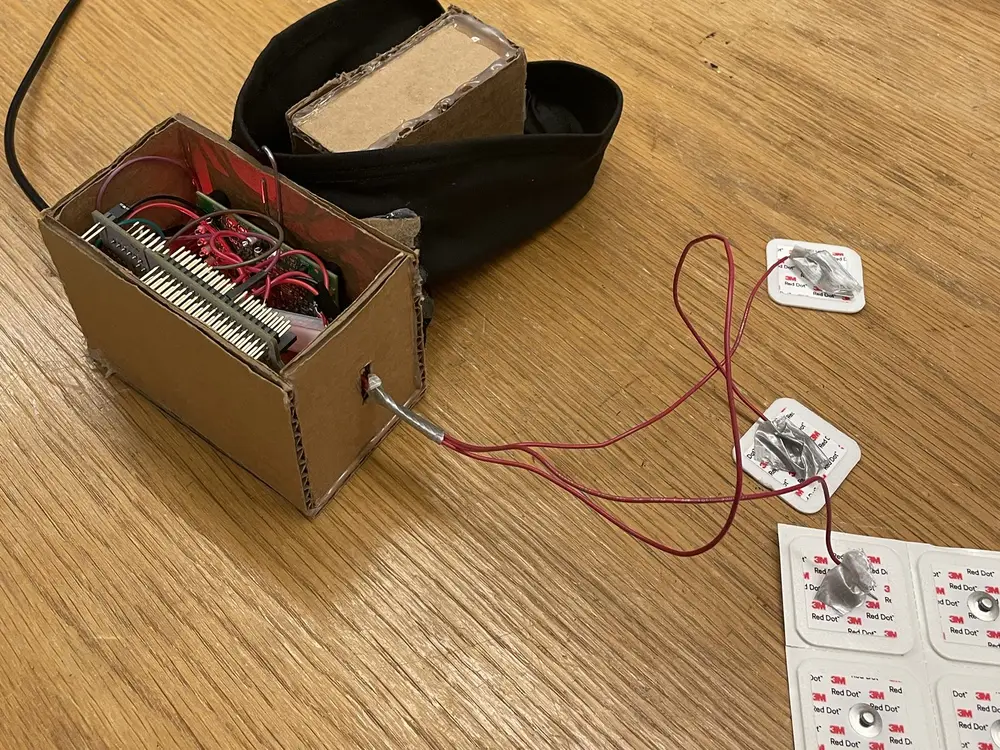
Designed a dual-channel AD8232 analog front end for EOG and implemented STM32 acquisition at approximately 200 Hz, with IMU input and serial streaming to the host.
HUMAN–COMPUTER INTERACTION
Separate continuous movement from discrete intent.
THE IDEA
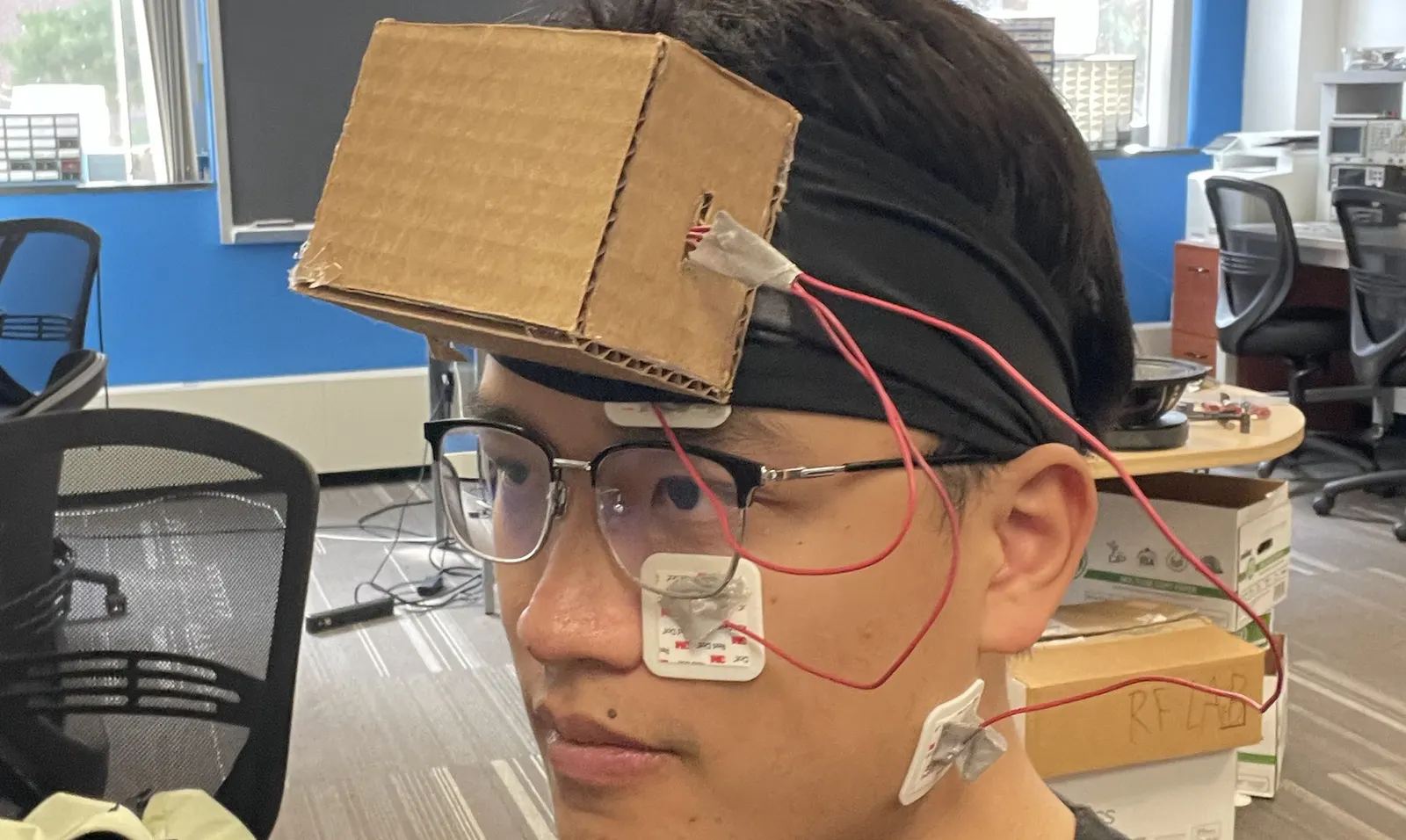
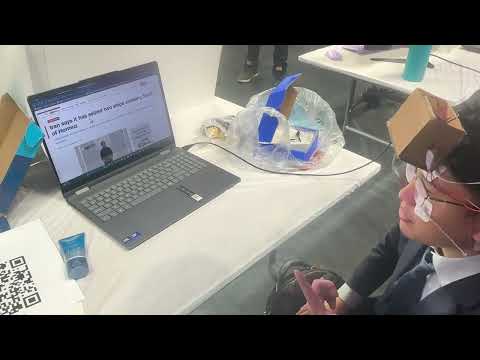
For my Rutgers senior capstone, our five-person team built a hands-free cursor using dual-channel EOG and head-motion sensing. I owned firmware and signal processing, including the analog front end, sensor acquisition, drift correction, and the eye-event classification pipeline. Our mentor was Simiao Niu.
MY CONTRIBUTION
Designed a dual-channel AD8232 analog front end for EOG and implemented STM32 acquisition at approximately 200 Hz, with IMU input and serial streaming to the host.
Applied Kalman filtering to estimate gyroscope bias. This separates slowly changing sensor offset from intended head motion before the cursor controller accumulates it.
Trained an RBF SVM on six recorded eye states. Combined eye events with head motion for clicking and scrolling, and evaluated action success using real hardware.
ENGINEERING CHALLENGE
The cursor’s state-space dynamics can accumulate a small gyroscope bias into visible drift. The useful fix was to estimate the changing bias with a Kalman filter and correct the motion input. This addressed the sensor-and-controller interaction directly, rather than treating drift as an eye-classification error.
RESULTS & SCOPE
87.0% ± 0.9% five-fold CV accuracy over 2,347 feature windows and six classes.
Approximately 77% mean success across the tested actions, with 20 attempts per action.
Eight unintended actions in a 10-minute idle trial (approximately 0.8 per minute).
Continuous hardware sessions of more than 10 minutes without restart.
Window-level cross-validation accuracy is different from end-to-end interaction success. Left/right gaze classes were not included in the evaluated ML dataset; navigation and centering actions requiring those classes were not evaluated in that mode.
Read the measured performanceTHE HARDWARE
SEE IT IN ACTION
 Watch the demo on YouTube